
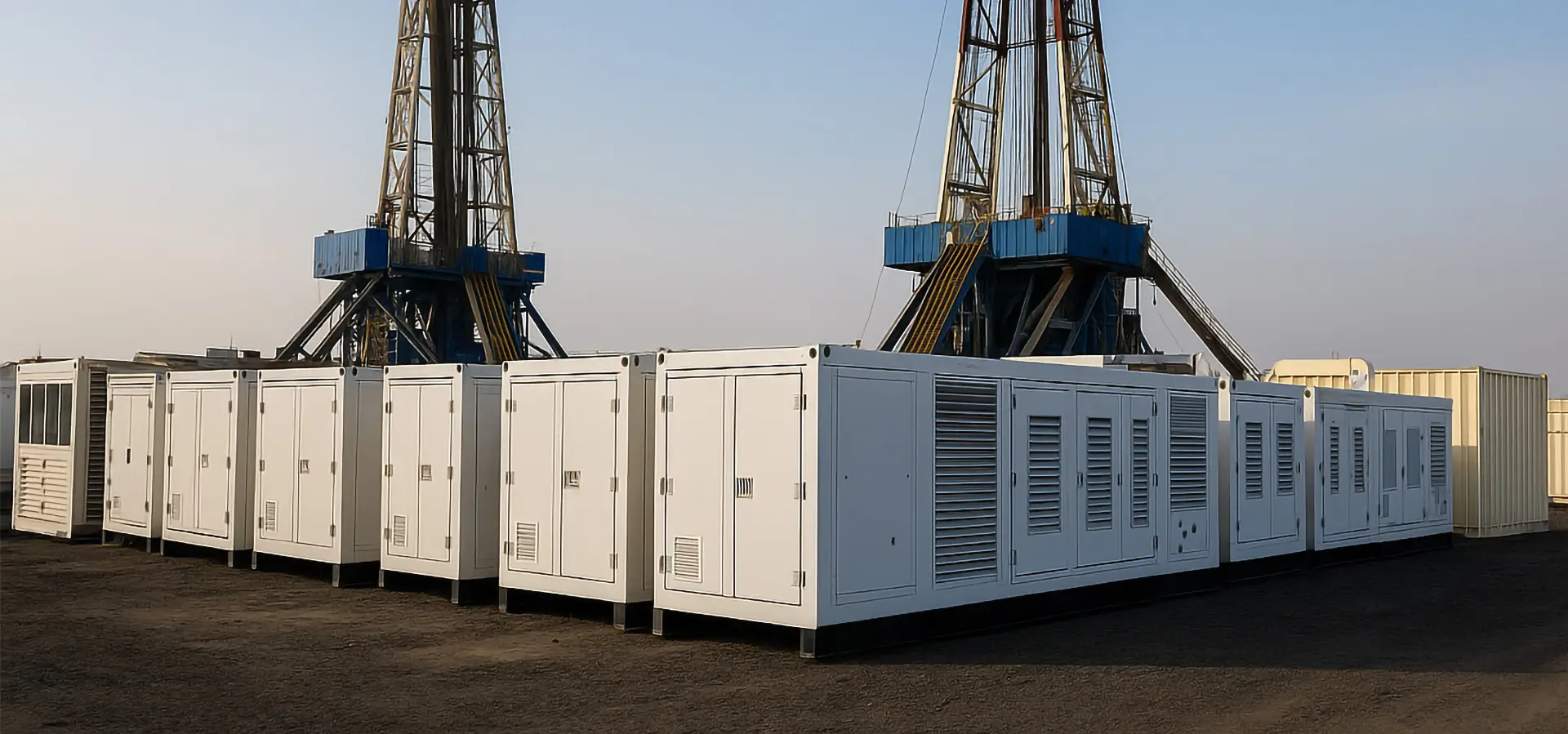
As global industries pursue carbon reduction, the question isn’t whether to move away from diesel — it’s how. Across Asia, Europe, and beyond, methanol generators are emerging as a serious alternative to diesel-powered systems. The transition isn’t theoretical anymore. It’s already underway in ships, factories, and off-grid power stations where reliability, emissions, and cost now share equal importance.
The Diesel Generator: Reliable, but Carbon Heavy
For nearly a century, diesel generators have been the backbone of power reliability. They run entire factories during outages, power construction sites, and keep hospitals online when the grid fails. The technology is mature, robust, and universally available.
But diesel’s environmental burden is undeniable. Burning one litre of diesel produces about 2.68 kg of CO₂, along with sulphur oxides (SOₓ), nitrogen oxides (NOₓ), and particulate matter (PM), which is the black soot visible in many exhaust plumes. Even with catalytic converters, diesel exhaust remains a major source of fine particulate pollution.
As emission standards tighten, the cost of compliance rises. Modern Tier 4 diesel systems require expensive aftertreatment, Selective Catalytic Reduction (SCR) and Diesel Particulate Filter (DPF), and ultra-low-sulphur fuel, adding to both capex and opex.
For many operators, diesel’s strength, its ubiquity, is now offset by its growing carbon and regulatory cost.
Methanol Generators: Familiar Mechanics, Cleaner Combustion
Methanol internal combustion engine (ICE) generators share much of diesel’s practicality. They run on liquid fuel, start instantly, and are compatible with conventional mechanical architectures. The key difference lies in what happens during combustion.
Methanol’s chemical simplicity, one carbon atom bonded to four hydrogens, means it burns with no sulphur, negligible soot, and roughly 60–70% less NOₓ emissions compared with diesel under similar load conditions.
Its high octane number allows efficient energy release without the knocking risks of gasoline or heavy hydrocarbons.
Although methanol contains about half the energy density of diesel by volume, its combustion is far cleaner. For backup or distributed power, where fuel storage can be scaled, that trade-off is often acceptable, especially when emissions compliance and community acceptance matter.
The Green Voyage 2050 initiative under the International Maritime Organization reports that methanol-powered engines can reduce greenhouse gas emissions by up to 15% even when produced conventionally, and by 60–95% when synthesized from renewable feedstocks.
Fuel Logistics and Operational Practicality
Methanol’s biggest operational advantage is familiarity.
It’s liquid at ambient temperature, storable in standard tanks, and pumpable through existing logistics networks, meaning no high-pressure cylinders or cryogenic systems required.
This makes methanol generators particularly attractive for:
In contrast, diesel’s main logistical advantage, energy density, is beginning to lose relevance as regulatory pressure and ESG reporting make local air quality just as critical as uptime.
Methanol is also biodegradable and disperses quickly in soil or water. Diesel spills can linger for years, contaminating groundwater and ecosystems.
Safety and Maintenance
Methanol is flammable and toxic if ingested, but when handled correctly, it’s a remarkably safe and predictable fuel. In the United States, both the Occupational Safety and Health Administration (OSHA) and the National Institute for Occupational Safety and Health (NIOSH) outline clear handling practices, which are proper ventilation, stainless-steel or polymer-compatible fittings, and sealed transfer systems to prevent leaks or unnecessary exposure.
In day-to-day use, methanol behaves far more gently than gasoline. It’s less volatile, ignites at a lower temperature, and is easier to manage in enclosed environments. Maintenance crews also appreciate what it doesn’t leave behind. No thick soot, no clogged filters, and far less oil contamination. Over time, that translates into cleaner engines, fewer service interruptions, and longer maintenance cycles.
For operators used to the grime and residue of diesel, methanol offers a quieter kind of reliability. One that’s safer, cleaner, and simply easier to live with.
The Carbon Math: Diesel vs Methanol
From a purely emissions standpoint:
That’s a direct 49% reduction in CO₂ per litre even before accounting for renewable production routes. When methanol is made from biomass or captured CO₂, its net lifecycle emissions can drop by up to 90%, according to the International Renewable Energy Agency (IRENA).
The global pivot toward “low-carbon methanol” means operators can adopt methanol generators today and automatically improve their sustainability metrics later — without changing hardware.
Where Adoption Is Happening
This adoption pattern mirrors what happened with diesel in the mid-20th century: one technology proving its value in multiple, distributed contexts until it became indispensable. Methanol is now on that same curve, but with cleaner credentials.
The Bigger Picture: Transition, Not Disruption
The goal isn’t to declare one fuel “better.” Diesel will continue to play a role in regions where logistics, cost, or cold weather favor it. But methanol represents something diesel can’t: a path forward.
Methanol ICE generators allow businesses to:
In short, methanol doesn’t replace reliability — it redefines it for the carbon-conscious age.
Conclusion
Diesel built the industrial world. Methanol may help clean it up.
With its liquid convenience, lower emissions, and alignment with the hydrogen economy, methanol is redefining what practical decarbonization looks like. For businesses seeking dependable power and a credible sustainability pathway, methanol generators are proving that cleaner energy doesn’t have to wait for tomorrow’s technology. It’s already here, running quietly, efficiently, and sustainably.