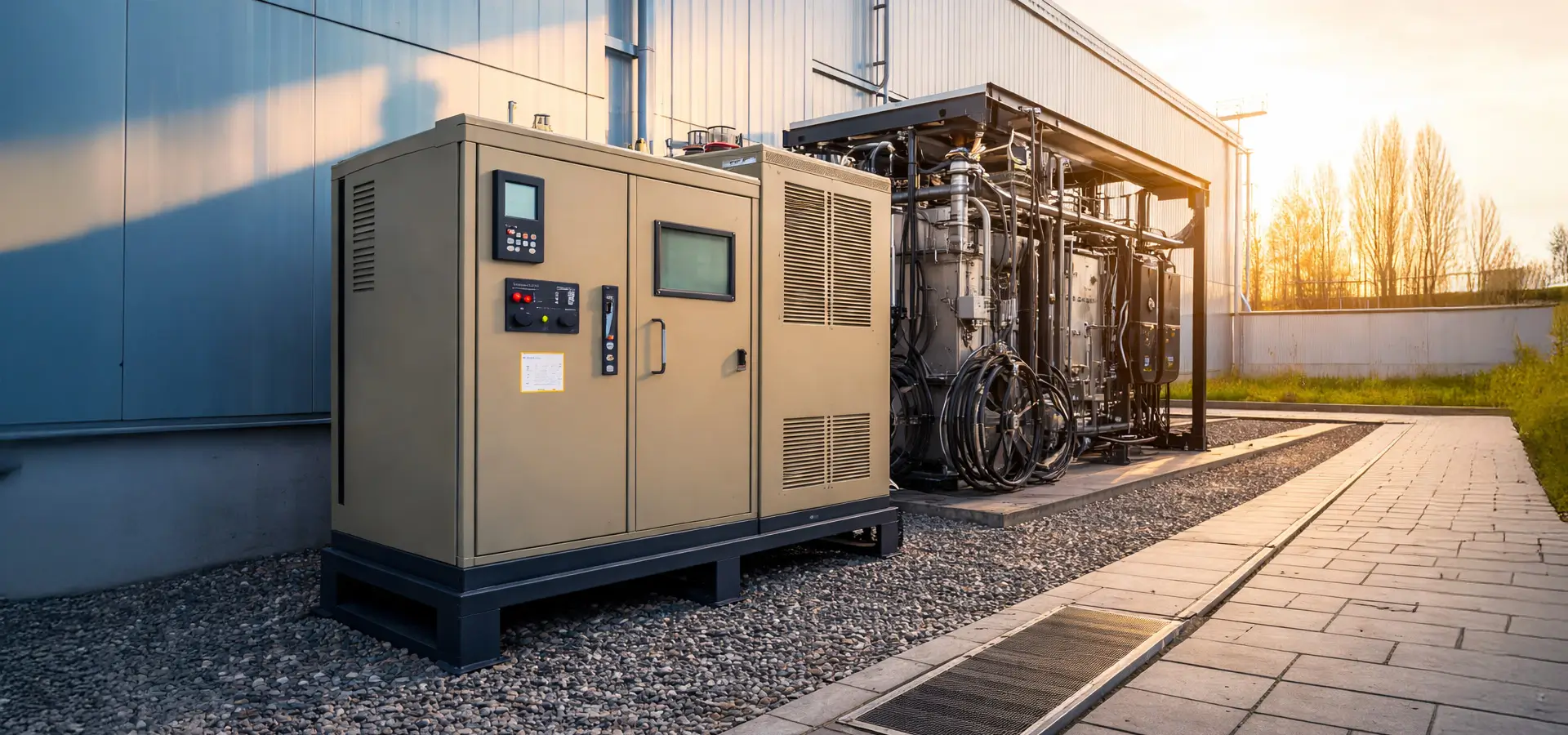
Backup power for critical services is non-negotiable. When the grid fails, systems like fire protection, emergency lighting, and fireman lifts must continue operating. For decades, diesel generators have been the default. Today, organisations are looking for ways to eliminate diesel, reduce operational emissions, and improve local air quality, without compromising reliability or compliance.
At our group company, Hydrogen Era Global (HEG), our focus is clear. Methanol ICE generator sets can serve as a highly practical replacement for diesel gensets in standby duty, especially where operational familiarity and authority-aligned performance expectations are essential.
What organisations want from a diesel replacement
Across the built environment, the desired outcomes tend to be consistent.
- Same backup availability, reliability, and performance for safety-critical services.
- Uninterrupted power during emergencies, supported by clear operating procedures and compliance-grade testing practices.
- A credible pathway to eliminate or significantly reduce diesel use without introducing operational risk.
- Scalable deployment across buildings of similar size, complexity, and critical service requirements.
- Fewer emissions and less disruption from routine testing, without creating complexity for site teams.
Why methanol ICE generator sets are a strong fit
A diesel replacement must first be judged on uptime and practicality. Methanol ICE gensets perform well on those fundamentals.
- Like-for-like standby architecture
A methanol genset keeps the standby operating model most facilities teams already rely on. Automatic transfer, critical load support, periodic inspection, and maintenance routines can remain familiar. This matters because the fastest transitions are usually the ones that don’t require operators to reinvent how backup power is managed.
- Cleaner local emissions profile than diesel
Methanol combustion typically results in very low soot and particulate emissions, and near-zero SOx at the point of use. In dense operating environments, that can improve site acceptability and stakeholder confidence, especially during routine testing and maintenance runs.
- Fuel pathway flexibility. Grey today, green for deeper decarbonisation
Organisations often need to move in phases. This allows a site to start practical implementation now, while maintaining a clear route to stronger carbon outcomes as certified supply and commercial terms align.
- Grey methanol supports immediate operational switching away from diesel.
- Certified green methanol is the pathway for deep lifecycle carbon reduction, with results dependent on the production pathway and verification.
- Repeatable design for portfolio rollout
For property owners and operators, scalability matters as much as performance. Methanol gensets can be deployed as part of a standardised template across buildings, including:
- Modular genset sizing and configuration.
- Standard operating procedures for testing and emergency response.
- Safety and storage design principles.
- Maintenance and service planning.
Optional enhancement. Hybrid testing to reduce routine run-hours
In many buildings, generator runtime is driven less by real outages and more by routine testing. If an organisation wants to reduce combustion hours during those checks, a hybrid architecture can be added as an option, typically by integrating a battery energy storage layer.
In this model:
- The methanol ICE genset remains the primary resilience backbone for extended outages.
- The battery can support shorter testing events or short-duration scenarios, reducing engine runtime and improving operational convenience.
The key point is this. Battery is optional. The core replacement is methanol ICE generation. Hybridisation simply provides an additional lever for organisations that want to reduce routine engine hours further.
How HEG supports implementation
HEG supports a structured pathway that keeps reliability and compliance front and centre.
- Feasibility assessment and load review (critical circuits, duty cycle, runtime expectations).
- Genset sizing and system configuration.
- Safety, storage, and fuel planning.
- Testing methodology and operating procedures aligned to site requirements.
- Deployment planning across single sites or portfolios.
Talk to HEG
If you’re evaluating a diesel replacement for backup power in critical services, our group company, HEG can help you move from concept to a deployable solution, starting with methanol ICE generators and adding hybrid options where it makes operational sense.