
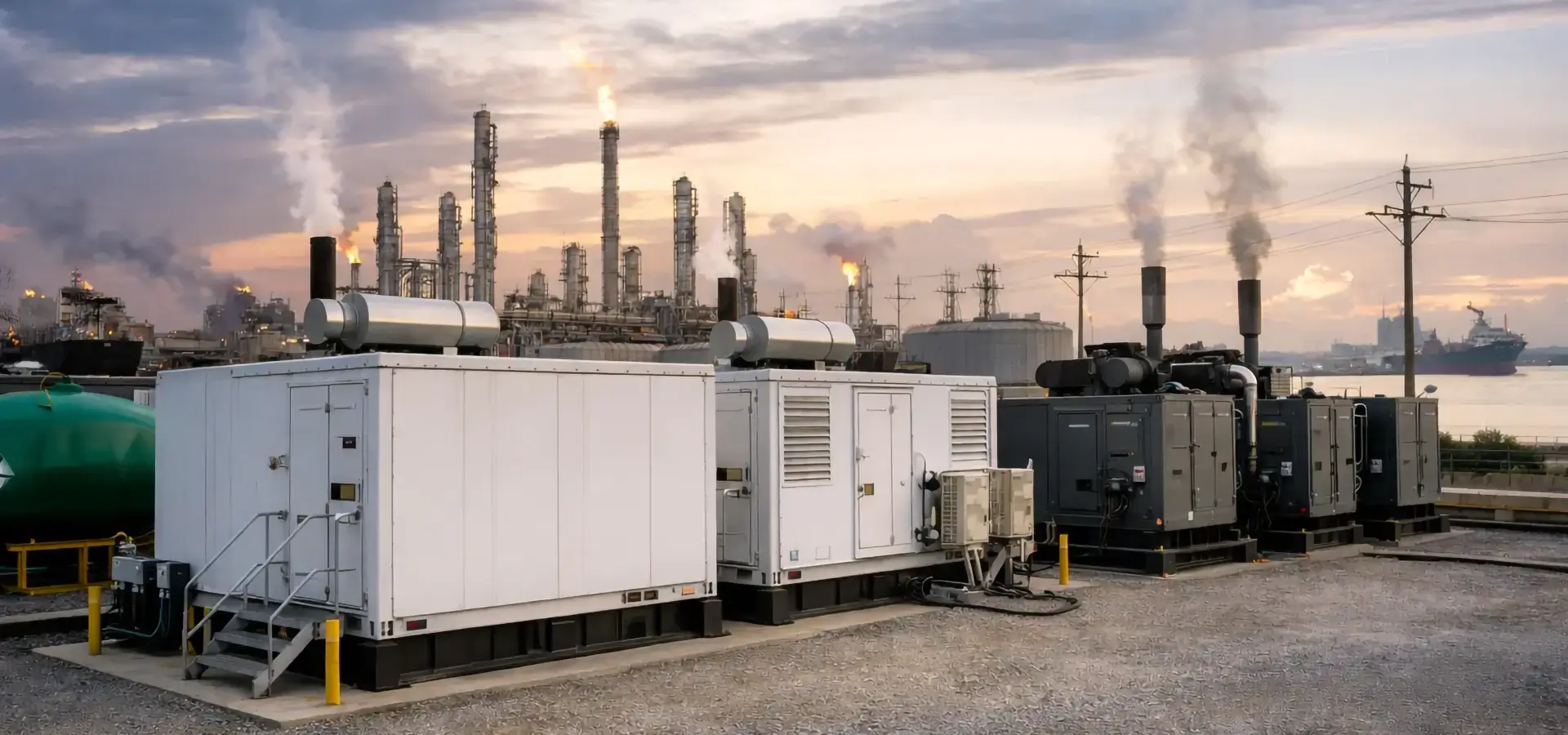
Fuel strategy matters more when markets become less predictable
In stable conditions, diesel is often treated as the default for backup power, temporary power, and distributed energy. It is familiar, widely used, and supported by a mature service ecosystem.
But periods of geopolitical tension tend to expose a different reality. Recent unrest in the Middle East has put fresh pressure on oil and refined fuel markets, particularly in Asia, where physical diesel and jet fuel markets have tightened sharply. Reuters reported that physical diesel and jet fuel prices in Asia climbed to record highs, while cash premiums and margins also surged as supply concerns intensified.
For businesses that rely on diesel gensets, this is not just market noise. It can translate directly into procurement risk, cost volatility, and more difficult operating decisions. The U.S. Energy Information Administration notes that crude oil is the largest component of diesel pricing, and that market conditions for distillates also materially affect diesel prices.
That is why methanol gensets deserve more serious consideration.
Diesel remains proven, but proven does not always mean resilient
Diesel still has clear strengths. It benefits from decades of operating familiarity, a large installed base, and broad availability across many sectors.
Yet a diesel-only strategy also leaves operators highly exposed to one dominant fuel chain. When crude supply, refinery output, freight flows, or middle-distillate balances come under pressure, diesel can reprice quickly. Reuters reported that Singapore gasoil, a key building block for diesel and jet fuel pricing in Asia, rose 33.5% from February 27 to March 4, and was still 66.7% above its February 27 level several days later.
For many businesses, that kind of movement changes the discussion. Fuel choice is no longer only about what has historically worked. It is increasingly about resilience, optionality, and how exposed operations are to sudden market shocks.
Methanol offers a different proposition
Methanol should not be presented as a one-size-fits-all answer. It is not. But it does offer a meaningfully different strategic proposition.
As a liquid fuel, methanol can be stored, transported, and handled within familiar industrial logistics frameworks. Methanex’s published pricing also shows that methanol is traded in transparent regional markets, with the Asia Pacific posted contract price for March 2026 at USD 365 per metric tonne.
That matters because recent pricing suggests a notable contrast. While methanol is also subject to market forces, its benchmark movement has been more measured than diesel-linked fuels during the current disruption. By comparison, Reuters reported that Asia’s diesel and jet fuel markets moved sharply higher, with multi-year-high cash premiums and record physical prices.
The point is not that methanol is immune to volatility. It is not. The stronger point is that diversification matters. A business that remains fully dependent on diesel remains fully exposed to the sharper swings often seen in oil-linked fuels during periods of stress.
Cleaner operations are part of the value story
Methanol also brings operational advantages that go beyond fuel pricing. Industry literature on methanol highlights its cleaner local emissions profile in suitable applications, including the absence of sulfur oxides and soot, with lower pollutant emissions more broadly depending on engine configuration and use case.
For companies operating in urban environments, customer-facing developments, industrial estates, or sites where emissions visibility matters, that can be commercially relevant. Cleaner operation is no longer just a technical benefit. It increasingly shapes stakeholder confidence, environmental positioning, and how future-ready a power solution appears.
The HEG view
At our group company, Hydrogen Era Global, we believe methanol should be assessed through a practical commercial lens. Not as a slogan. Not as a political statement. And not as a perfect substitute for diesel in every scenario.
We see methanol gensets as a serious option for businesses that want to reduce dependence on a single conventional fuel, improve site-level emissions performance, and explore a more flexible power strategy in an increasingly uncertain market environment.
In that context, methanol gensets are no longer just an emerging alternative. They are a strategic conversation worth having now.
References: